The Story of Carrozzeria Vignale: A Small Turin Workshop That Shaped Italian Automotive History
When people talk about Italian design, they often think of the big names like Pininfarina, Bertone or Zagato. But behind many beautiful Italian cars there is also Carrozzeria Vignale, a much smaller coachbuilder from Turin that produced some of the most elegant and rare automobiles of the 1950s and 1960s. For me, Vignale has always been special—not only because of our own Alfa Romeo 2000 Vignale, but also because of the unique style and spirit the company represented.
In this article, I want to share the story of Vignale: where it started, how it developed, and why its cars are still admired by collectors today.
Who Was Alfredo Vignale? The Man Behind the Name
Alfredo Vignale was born in 1913 in Grugliasco, a small town near Turin. Like many young men in the region at that time, he grew up surrounded by the Italian car industry. Fiat, Lancia and many smaller workshops were all close by.
Vignale started as a panel beater and craftsman, learning the traditional skills of shaping metal by hand. These skills later became the heart of the company: every car that left the workshop had body panels that were shaped individually, not stamped by machines. Because of this, each Vignale car has its own character, even when several cars were built from the same design.
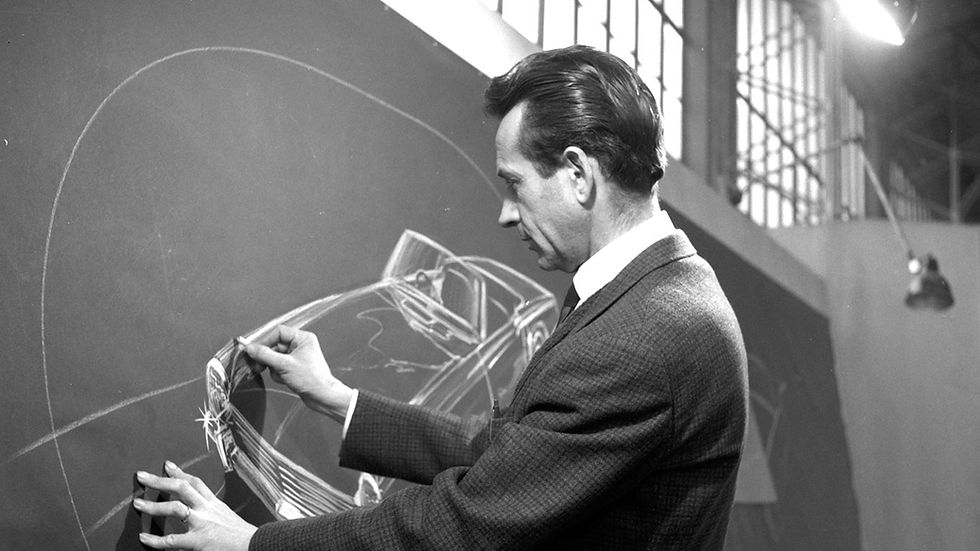
After working for Pininfarina for a few years, Alfredo Vignale opened his own workshop in 1946. It was a small place at first, but it quickly attracted attention for its clean lines, elegant proportions and the special “Vignale touch” that many enthusiasts still talk about today.

What many people don’t know is that Alfredo Vignale was not only a talented craftsman, but also a warm and charismatic personality. People who worked with him often described him as someone who combined creativity with a very practical, hands-on approach. He liked to walk through the workshop, speak with the metalworkers, and check the details himself. Even when the company became more successful, he stayed close to the everyday work.

The Golden Years of Vignale: Italian Coachbuilding at Its Best
The post-war years were the golden time for Italian coachbuilding. Car companies produced the chassis and engines, and talented designers created unique bodies on top of them. Vignale collaborated with many brands, including Alfa Romeo, Ferrari, Maserati, Fiat, Lancia and Jensen.
These were not mass-produced cars. Most Vignale bodies were built in very small numbers—sometimes only one, sometimes a handful. Because of this, surviving Vignale cars are extremely rare today.
During the 1950s, Vignale worked closely with a young designer named Giovanni Michelotti, who later became one of the most influential car designers in the world. Many of the most beautiful Vignale cars from that period are actually Michelotti’s creations. He had a clean, modern style that still looks elegant today.

Vignale and Alfa Romeo: A Short But Fascinating Collaboration
Alfa Romeo and Vignale did not work together as often as Alfa did with Touring Superleggera or Zagato, but the models that came from this partnership are very special.
The best example is of course the Alfa Romeo 2000 Vignale, also called the 2000 Coupé Vignale, built in extremely small numbers—just 47 cars.Alfa provided the chassis and mechanical parts, and Vignale added a unique and refined coupé body with typical Michelotti lines.
Many Alfa enthusiasts today don’t even know that this model exists, simply because so few were built. For collectors, this makes the car even more interesting. It represents a moment in Alfa Romeo’s history where craftsmanship, design and engineering came together in a pure and very Italian way.
What Makes Vignale Cars So Special?
When you look at a Vignale car—even one that is unrestored—you immediately feel that it comes from another era. These cars were not built in big factories. They were shaped by hand, often by only a small team of craftsmen.Because of this, no two cars are 100% identical.
Some qualities make Vignale cars especially unique:
Hand-crafted bodywork with small variations
Elegant, simple lines that age beautifully
Very low production numbers
Collaborations with great designers
Strong connection to Italian motoring culture
For many collectors, these qualities give Vignale cars a special soul. You don’t just own a vehicle—you own a piece of art from a very creative moment in Italian automotive history.

The End of an Era for Carrozzeria Vignale
By the late 1960s, the era of Italian coachbuilders was coming to an end.Large car manufacturers started to build their own bodies, and the demand for hand-made cars decreased. Unfortunately, Vignale could not compete with industrial production and closed its doors in 1969, shortly after Alfredo Vignale’s tragic death in a car accident.
The name “Vignale” still exists today, but it is used by Ford for special trim levels and has no connection to the original Italian company. For enthusiasts, the real Vignale lives on only in the cars that survived.
Why the Legacy of Vignale Still Matters Today
Today, collectors and historians appreciate Vignale more than ever. The cars are rare, the craftsmanship is exceptional, and the designs represent an important chapter in Italian automotive culture. For owners of Vignale-bodied cars—like the Alfa Romeo 2000 Coupé—this history adds a deeper meaning. You don’t just drive a classic car; you keep the memory of a small but brilliant workshop alive.
For me personally, learning more about the history behind our car has made the ownership experience even richer. Every time I look at the details of the bodywork, I think about the hands that shaped it and the small team in Turin who built it more than 60 years ago.

Comments